The mango that broke a market
It is peak mango season in India. The Alphonso harvest is at its richest, the Kesar at its most fragrant.
The appointment of Lt Gen Raja Subramani as the next CDS has drawn criticism from multiple quarters, though the logic in some cases is bizarre.




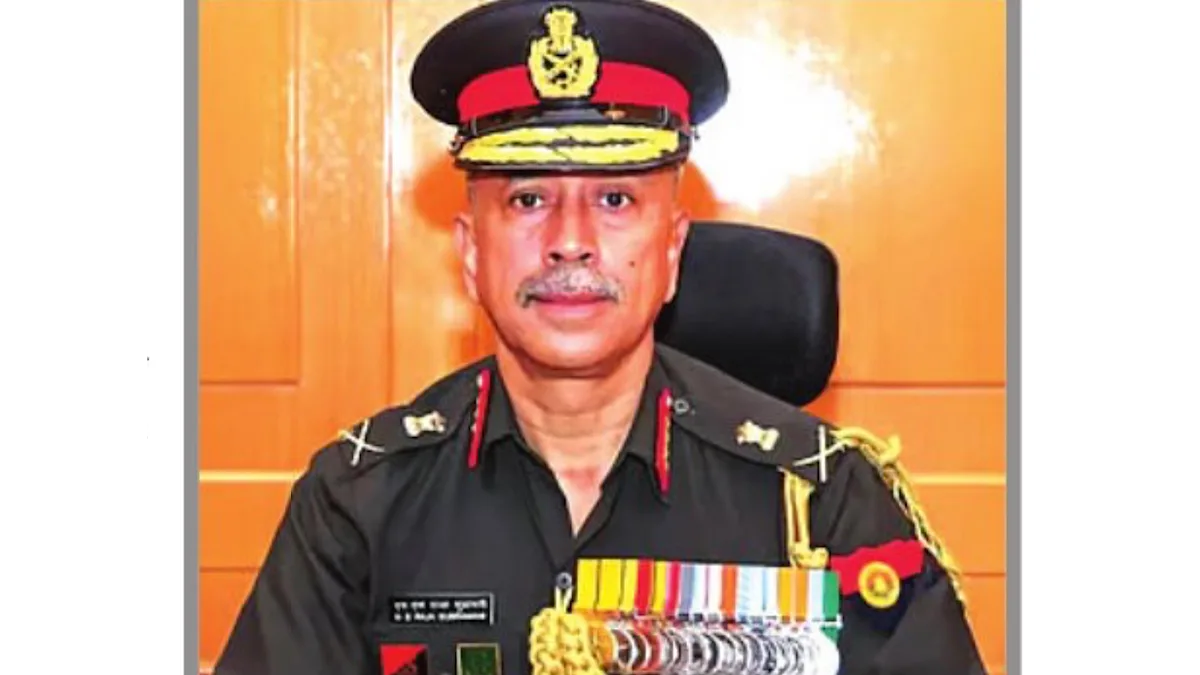
Photo:SNS
The appointment of Lt Gen Raja Subramani as the next CDS has drawn criticism from multiple quarters, though the logic in some cases is bizarre. Even before the appointment was announced, several publications appeared to suggest that the next CDS should be from the navy or air force as a sign of jointness and integration, and due to the changing nature of warfare from land-centric to multi-domain.
It appeared the authors presumed that any army appointee would lack awareness of other services. However, the government had its own views and appointed General Raja Subramani who, with his vast experience, is ideally qualified. An op-ed was published in the Japan Times title d, “Is Mo di ‘coup-proofing’ Indian Military?” I wonder why the Japanese public would be interested in the appointment of an Indian CDS. Add to this the warped logic in the article stating that by appointing retired officers, the government is ‘coup-proofing’ the country.
Advertisement
It stated, “a retired officer re-entering service on a contractual basis inevitably derives authority less from institutional standing than from political selection.” Possibly the author has neither understood the logic of appointing a retired three-star or the military’s role in preserving democracy. Two other critical articles were published in The Wire and the Indian Express by known defence analysts. In The Wire, apart from questioning the appointment of a third CDS from the army, there was also the illogical comparison of Gen Subramoni being from the Garhwal Rifles and that the first two CDS belonging to the Garhwal region of Uttarakhand.
Advertisement
Such warped comparisons do not even merit a comment. Both articles raised the issue that Generals Anil Chauhan and Raja Subramani were Military Advisors to the National Security Council Secretariat (NSCS) under the National Security Advisor, highlighting that this was the grooming phase for the appointment. The intent was to link NSA Ajit Doval to the selection. What was ignored is that the government chooses military advisors to the NSCS based on their capabilities and knowledge rather than anything else. Prior to Gen Subramani, the military advisor was Air Marshal Sandeep Singh. Critics also possibly intentionally ignored government retirement rules solely to drive home a point. Government servants retire at 60, unlike members of the armed forces, for whom retirement ages vary with rank.
Lt Generals and their equivalent retire at 60, while chiefs at 62 or three years as chief, whichever is earlier. Apart from General Bipin Rawat who retired before he was 62 (having completed three years), all service chiefs generally retire after completion of 62 years of age. This makes them ineligible for appointment as CDS. Considering this shortcoming, the pool was expanded to include Lt Gens and their equivalents, serving and retired, from all services. There is just one service chief selected from multiple three-stars. The selection has always been on seniority (barring the case of General Rawat who superseded two others). Those who miss out on becoming chief, having met all other criteria, do so because of seniority and age, not capability.
Hence, considering them ineligible for becoming CDS is warped logic. Another criticism has been why retired and not from serving three-stars. A retired officer is a better choice than a serving one for reasons of seniority. In a couple of months, post the appointment of the next air force chief, General Subramani would be senior to all service chiefs. If a CDS is selected from amongst the serving, the possibility of this happening is very low. The CDS simultane ously heading the Department of Military Affairs (DMA) makes him more an advisor and b ure aucrat , apar t from coordinating decisions. Command and control would rest with the VCDS (Vice CDS), a serving three-star.
Another criticism common to all published articles is the fact that war has shifted to multiple domains, increasing threats in the Indian Ocean region and the need to adhere to a tri-service nature of appointment. However, once again there are aspects glossed over. Firstly, in the Indian context, while ‘nature of conduct of war’ may have changed, the end result will be determined by loss or gain of territory, other actions being a means to the end. Land will remain the primary battlefield. Comparing a skirmish like Op eration Sindo or or a salami-slicing operation like Galwan or even a limited operation like Vijay in Kargil, to the future nature of war, for which the armed forces are preparing, is illogical.
Secondly, critics have deliberately ignored proposals forwarded to the government by the CDS on Integrated Theatre Commands (ITCs). The proposal mentions that ITCs would function under the Chiefs of Staff Committee comprising of the CDS and service chiefs, with the CDS being the first amongst equals. Theatre Commanders would report to the VCDS, who would not be of the same service as the CDS. Thus, functional control of ITCs would not be with an army officer, but one of a different service. Another aspect ignored is that the appointment of a CDS is the prerogative of the government. The government does not have to adhere to a rotational model, as desired by many.
Further, assuming that an army CDS would lack employment knowledge of other services is moving the system back into compartmentalization, from which they are just emerging. The same could be said no matter from which service the CDS emerges. ITCs would ensure that planning is centralized and employment optimized by involving service experts at every level. This structure would also be adapted by the IDS (Integrated Defence Staff). Interestingly, the armed forces have proposed four-star generals as theatre commanders and VCDS, apart from the CDS and service chiefs. Whether the government would approve it is to be seen as the bureaucracy is loath to accepting additional senior officers from amongst the forces. The critics have also claimed that theatre commands would replace existing service commands, something unlikely to happen.
In the current security construct, wars, either limited in scope or enlarged, would ultimately aim at gain or loss of territory. Thus, the need to develop joint deterrence capabilities. With territory being the primary concern, the army would always remain the dominant force. The CDS’s major role would be making ITCs functional with cooperation from all branches of the armed forces, for which we need to support the appointment, rather than continue unwarranted criticism, a well-known Indian trait.
(The writer is a retired Major-General of the Indian Army.)
Advertisement